Top 10 Automotive Parts Manufacturer Companies You Should Know?
The global automotive parts manufacturer industry plays a crucial role in the economy. In 2022, the market was valued at over $400 billion, reflecting its significance. As automotive technology evolves, so do the needs for quality parts. Manufacturers must stay ahead of this fast-paced change.
Key players in this sector are essential for vehicle performance and safety. Companies like Bosch and Denso lead with innovative solutions. Demand for electric vehicles is also growing. This shift brings challenges and opportunities. Traditional manufacturers face pressure to adapt.
As we explore the top automotive parts manufacturer companies, we must recognize their influence. The market is competitive, and not every company can keep pace. Examining successful manufacturers can offer insight for future trends and challenges. Understanding who leads the industry reveals opportunities for growth and investment.
Top 10 Automotive Parts Manufacturers: An Overview of Industry Leaders
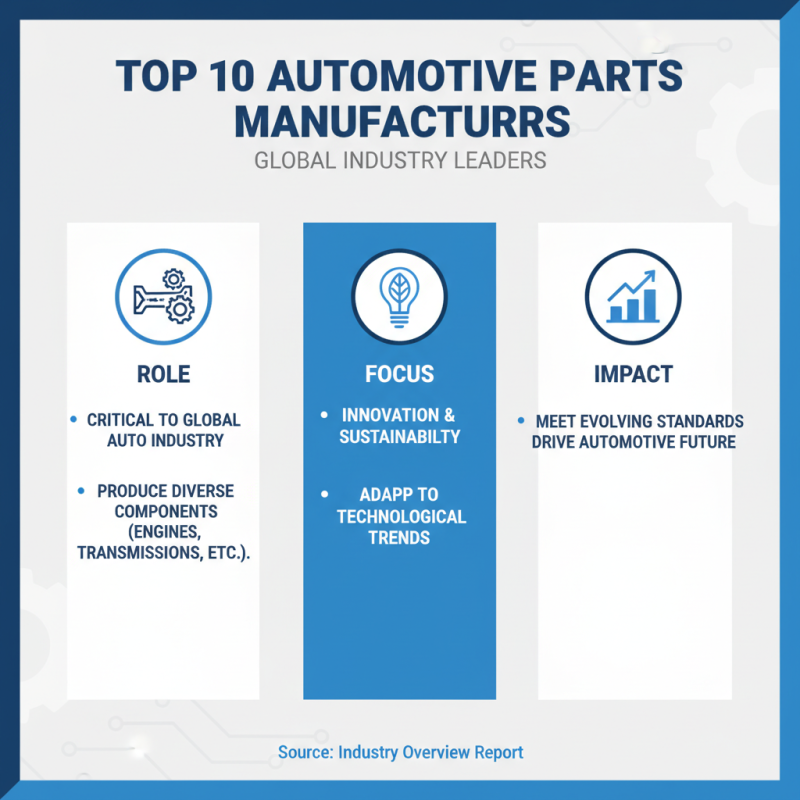
The automotive parts manufacturing sector plays a critical role in the global automotive industry. Many companies in this field specialize in producing diverse components, from engines to transmission parts. These manufacturers often emphasize innovation and sustainability. They continuously adapt to technological trends, ensuring their products meet evolving standards.
Some leading manufacturers focus on high-quality materials. This allows for better performance and longevity of vehicle parts. They also invest in research and development. This commitment drives advancements and improves safety features. However, the industry faces challenges, such as fluctuating raw material prices. This issue can impact production costs and profit margins.
Customer expectations are always rising. Companies must not only provide quality but also evolve rapidly. Sustainability concerns are becoming crucial in manufacturing processes. Many manufacturers are exploring greener options. This shift aims to reduce the environmental impact associated with producing automotive parts. Balancing these demands requires constant reflection and adaptation.
Market Share Analysis of Leading Automotive Parts Manufacturers in 2023
In 2023, the automotive parts manufacturing sector sees intense competition. Key players dominate with substantial market shares. Data shows that the top ten manufacturers control nearly 60% of the global market. This consolidation allows for better resource management and innovation. Advanced manufacturing technologies also play a pivotal role in this arena.
Notably, supply chain disruptions have challenged several manufacturers. The semiconductor shortage highlighted vulnerabilities. Many companies had to rethink their strategies. They are investing in local sourcing and technology upgrades. Market analysis reveals a growing trend toward electric vehicle components. This shift may redefine existing market dynamics. Companies focusing on electric parts anticipate significant growth opportunities.
Moreover, sustainability is becoming a priority for manufacturers. Eco-friendly practices are slowly gaining traction. However, not all companies are adapting quickly. Some still hesitate to invest in greener technologies. Industry reports suggest that consumer demand for sustainable products is rising. This change may compel manufacturers to innovate faster or risk losing market share.
Top 10 Automotive Parts Manufacturer Companies You Should Know - Market Share Analysis of Leading Automotive Parts Manufacturers in 2023
| Rank |
Revenue (in Billion $) |
Market Share (%) |
Year Established |
Headquarters |
| 1 |
45.3 |
18.5 |
1909 |
Germany |
| 2 |
39.7 |
16.2 |
1921 |
USA |
| 3 |
35.1 |
15.4 |
1935 |
Japan |
| 4 |
28.9 |
12.8 |
1945 |
South Korea |
| 5 |
26.5 |
11.0 |
1960 |
France |
| 6 |
24.7 |
10.5 |
1982 |
Italy |
| 7 |
22.4 |
9.6 |
1990 |
China |
| 8 |
20.8 |
8.5 |
1975 |
Spain |
| 9 |
18.3 |
7.1 |
1988 |
India |
| 10 |
16.2 |
6.3 |
2001 |
Canada |
Innovations in Automotive Parts: Trends from Top Manufacturers
The automotive parts industry is undergoing significant innovations. Manufacturers focus on developing lightweight materials. This shift enhances fuel efficiency and improves vehicle performance. Advanced composite materials and metals are at the forefront of this trend. They offer strength without the added weight.
Smart technology integration is another prominent trend. Manufacturers implement sensors within parts. This allows real-time data collection, enhancing vehicle diagnostics and safety. Automated systems can predict maintenance needs. These innovations not only improve user experience but also empower manufacturers to refine their processes.
Moreover, sustainability is becoming essential. Many manufacturers strive to incorporate recycled materials into their products. This trend reflects a growing awareness of environmental responsibility. However, transitioning to greener materials isn’t without challenges. Balancing performance and sustainability often requires extensive testing and iterations. The journey towards innovation is complex, but necessary for a better future in automotive parts.
Innovations in Automotive Parts: Trends from Top Manufacturers
Global Supply Chain Challenges Faced by Automotive Parts Companies
The global automotive industry currently faces significant supply chain challenges. Disruptions affect everything, from production schedules to component availability. The pandemic heightened these issues, revealing vulnerabilities in sourcing practices.
Automotive parts manufacturers must adapt swiftly. Delays in shipping and increased transportation costs are common hurdles. Fluctuating raw material prices also add pressure. Companies must monitor market trends closely to navigate these complexities effectively.
Tips for manufacturers include:
- Diversifying suppliers to mitigate risk.
- Establishing local partnerships to reduce dependence on distant sources.
- Investing in technology boosts transparency throughout the supply chain, enhancing decision-making.
Continuous evaluation is essential, as strategies may need adjustment based on evolving conditions.
Flexibility remains crucial in this unpredictable environment. Companies must be prepared to pivot as new challenges arise. Relying on outdated processes can hinder growth. Finally, fostering open communication with stakeholders improves collaboration and problem-solving capabilities.
Future Outlook: Growth Projections for Automotive Parts Manufacturers
The automotive parts manufacturing industry is poised for significant growth over the next decade. Projections indicate that the global automotive parts market is expected to reach approximately $1 trillion by 2026, growing at a compound annual growth rate (CAGR) of around 4.5%. This expansion is fueled by several factors, including increasing vehicle production and the rising demand for electric vehicles (EVs). MarketsandMarkets report highlights that EVs alone could account for over 20% of total automotive parts demand by 2030.
However, the shift toward sustainable and smart technologies presents challenges. Many manufacturers face delays in adapting to new technologies, resulting in a disparity between innovation and production capacities. The focus on supply chain resilience and strategic partnerships is vital here. According to a Deloitte study, companies that invest in advanced manufacturing technologies, such as automation and AI, can improve efficiency by as much as 15-20%. Nonetheless, the transition requires upfront costs and a reevaluation of existing processes, which may not be feasible for all players.
As manufacturers navigate these complexities, balancing innovation with reliable production remains critical. Insights suggest that those who proactively invest in R&D and workforce training are likely to gain a competitive edge. Furthermore, a keen understanding of consumer trends will guide manufacturers in aligning their product offerings with market demands. Engaging with these challenges can lead to organic growth, although the journey may involve setbacks that require thoughtful analysis and adaptation.