How to Choose the Right Automotive Tubing Supplier for Your Needs?
Choosing the right automotive tubing supplier is crucial for your projects. The tubing you select can impact vehicle performance, safety, and longevity. Many suppliers provide various materials and specifications. However, not all meet the necessary quality standards.
When evaluating potential suppliers, consider your specific needs. Look for those who offer custom solutions rather than generic options. Quality assurance is vital, as defective parts can lead to costly failures. A reliable automotive tubing supplier should guarantee durability and performance.
Communication is also key. Suppliers should be responsive and able to address your questions. A company that shows understanding of your requirements can make a significant difference. Yet, always remain cautious—some suppliers may over-promise. Taking the time to reflect on these aspects can lead to a more informed decision.
Understanding the Types of Automotive Tubing Available in the Market
When selecting automotive tubing, it's essential to understand the various types available in the market. Automotive tubing typically includes rubber, plastic, and metal options, each serving a distinct purpose. Rubber tubing is commonly used for hoses due to its flexibility and durability. For example, EPDM rubber is often employed in coolant systems because it withstands high temperatures. This tubing type is crucial, as data shows that over 40% of automotive failures are linked to cooling system issues.
Plastic tubing, particularly polyurethane and nylon, has gained popularity. Its lightweight nature and resistance to chemicals make it ideal for fuel lines and air induction systems. Industry reports suggest a significant rise in the use of plastic tubing, reflecting a shift toward more efficient materials. However, it's worth noting that not all plastic tubing can handle extreme temperatures, leading to premature failures. About 30% of professionals reported challenges with thermal stability in certain applications.
Metal tubing, such as stainless steel, is vital for high-pressure applications. It's robust but can be more expensive. Data indicates that failures from metal fatigue account for about 20% of mechanical issues in vehicles. Therefore, improper selection can result in costly repairs or safety hazards. Choosing the correct type of tubing requires careful consideration of factors like temperature tolerance, material compatibility, and application requirements.
Types of Automotive Tubing and Their Market Demand
Identifying Reliable Automotive Tubing Suppliers
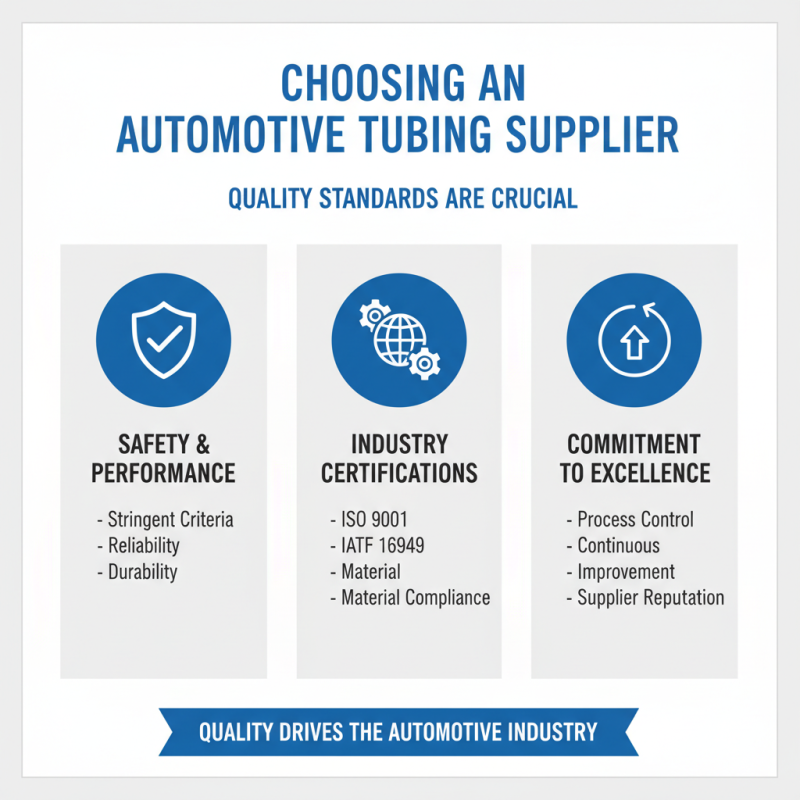
Finding the right automotive tubing supplier involves careful evaluation. Reliability is essential. Look for suppliers with a proven track record in the industry. According to recent industry reports, more than 75% of manufacturers prioritize quality and reliability over cost. The connection between supplier choice and product durability cannot be overlooked.
Confirm that potential suppliers have relevant certifications. ISO standards are crucial indicators of a supplier's commitment to quality. A study by the American Society for Testing and Materials (ASTM) revealed that 65% of defective products stemmed from subpar materials. This highlights the need to inspect a supplier’s quality assurance process.
Communication is key in maintaining a healthy supplier relationship. Assess how responsive and transparent a supplier is. A survey from the Automotive Industry Action Group (AIAG) found that 70% of supply chain issues arise from inadequate communication. You might face delays or quality issues if a supplier does not communicate effectively. Balance price with these critical factors for long-term success.
Assessing Supplier Capabilities and Production Processes
When choosing an automotive tubing supplier, understanding their capabilities is key. Look for suppliers who have a strong track record in the industry. It’s essential to assess their production processes. What materials do they use? Are they using the latest technology? A good supplier should have modern machinery and skilled staff. This ensures that tubing meets high-quality standards.
Don't overlook certifications. They show that a supplier adheres to industry regulations. Consider their production capacity. Can they meet your demands? A supplier may be capable today but may struggle in the future. Ask about their quality control practices as well. An inconsistent approach can lead to issues down the line.
Visiting the supplier's facility can provide insight. It’s important to observe workflow and cleanliness. Is there an organized approach to inventory management? Talk to their team. You might find gaps in communication or understanding that could impact your project. Trust your instincts on the relationship. It should feel like a partnership, not just a transaction.
Comparing Pricing and Delivery Options from Multiple Suppliers
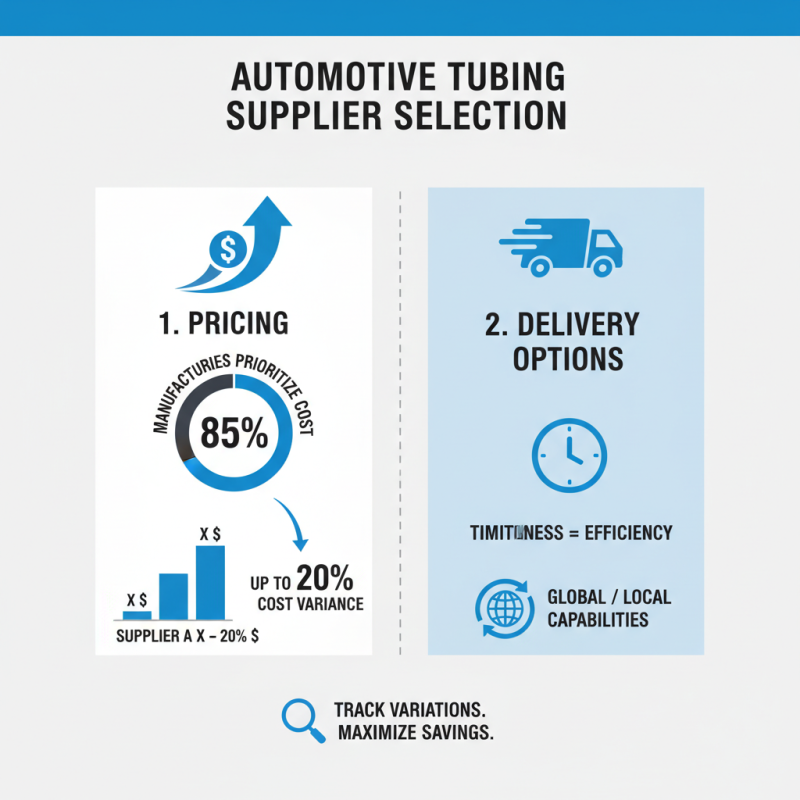
When choosing an automotive tubing supplier, pricing and delivery options play crucial roles. Studies indicate that 85% of manufacturers prioritize cost-effectiveness in supplier selection. Competitive pricing can significantly impact your bottom line. For example, the average cost variance between suppliers can reach up to 20%. Tracking these variations is essential.
Beyond pricing, delivery reliability matters just as much. Research shows that 62% of businesses experience delays from at least one supplier each year. Timely delivery is necessary for meeting production schedules. Late deliveries can lead to slowed operations and increased costs. Some suppliers may promise quick turnaround times but fail to deliver. Verify their track record before committing.
Explore multiple quotes to understand the landscape better. Relying on a single supplier may limit your options. A diverse supplier base can help mitigate risks. Transparent communication about lead times can simplify decision-making. Analyze all aspects, including customer reviews, before finalizing your choice. Not all suppliers will meet expectations, so due diligence is vital.